Category guide6 min readSeptember 21, 2026
Virtual try-on for jeans: waist and inseam, not S, M, L.
Jeans are sized in inches, bought on the rise and the leg, and returned on the waist. A try-on that guesses a letter size is no use here. How measurement-based sizing and rendering work on denim, and what a denim brand should check before switching one on.
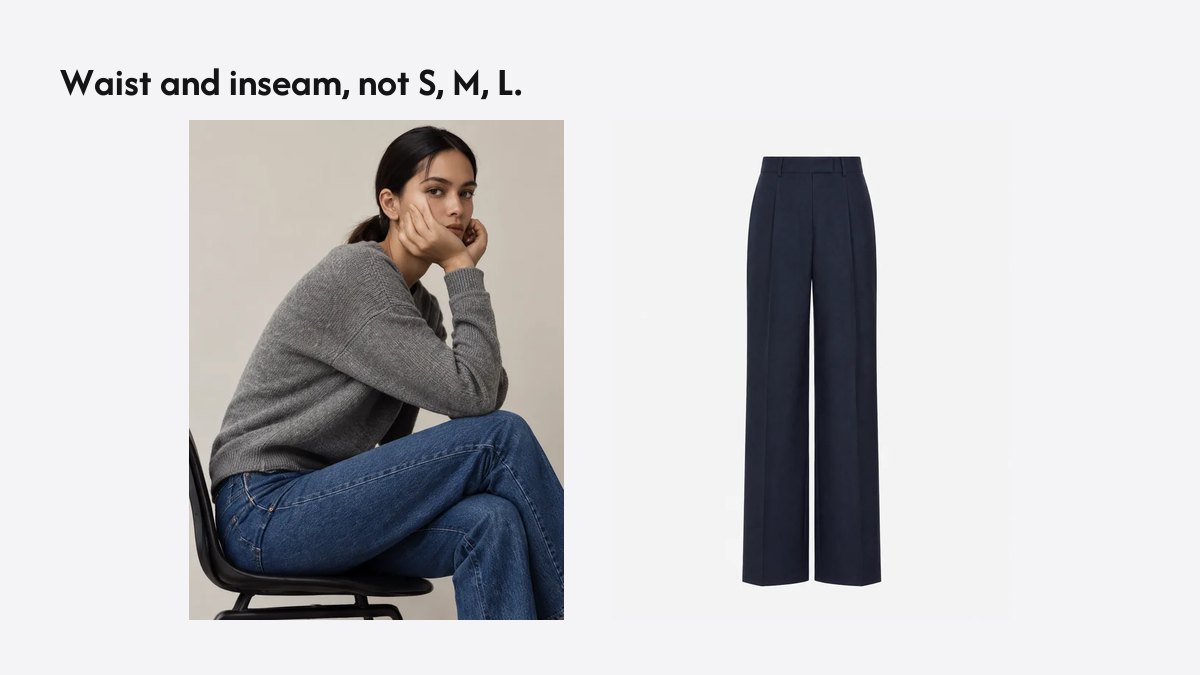
Jeans are the category where the size is already a measurement. A 30/32 is a waist and an inseam in inches. That should make sizing easier than for a dress, and instead denim returns are stubborn, because the number on the label and the number on the body are not the same thing, and because rise, stretch and leg shape change how any waist size feels.
Why a letter-size tool fails on denim
Most sizing tools were built for S, M, L. Ask them about a 29 and a 30 and they round. A tool that reasons from what a shopper bought last time is worse: a 30 in one brand’s rigid selvedge and a 30 in another’s stretch skinny are different garments, and the tool cannot tell them apart. Height and weight do not size a garment; on denim they are almost irrelevant, because two shoppers of the same height and weight wear different waists.
How Garu sizes a pair of jeans
Garu estimates the shopper’s waist and inseam from one full-length photo, then matches them against your chart for that specific pair. The recommendation comes back as a size on your scale, with a fit note. If your chart lists both waist and inseam per size, the recommendation includes the length. The tool never uses the shopper’s previous orders, so a shopper whose waist has changed since last season gets a recommendation for the body in the photo, not the one in your order history.
What the render shows on denim
- The rise. Where the waistband sits on the shopper’s torso, which a flat product photo fixes at wherever the model’s did.
- The break. Where the hem meets the shoe on the shopper’s leg length, and whether a 32 stacks or a 30 floods.
- The seat, from behind. The view that decides most denim purchases in a real fitting room, rendered from the same photo.
Garu renders the front and the back on every plan. For a brand with several lengths per waist, Garu Plus renders each size as its own garment, so a shopper compares a 30 and a 32 inseam on their own legs rather than reading a chart.
Before you switch it on
- Charts in the unit you sell in. Waist and inseam per size, in inches or centimetres, with garment measurements if you have them.
- A stretch note per style. Rigid, comfort and high-stretch denim size differently on the same waist. One line per style tells the recommendation, and the shopper, what to expect.
- A clean front photo per pair. The render reads the garment from your product image. Jeans shot flat, front on, render best.
Start with the pairs that come back
Pull the return reasons on your denim and find the styles where “waist too tight” or “too long” cluster. Enable try-on on those three first, watch a week of sizes recommended against sizes ordered, and expand from there. The install guide covers the steps. On denim, the whole value is in the recommendation being a measurement; make sure whatever you install gives you one.
Questions merchants ask
Can virtual try-on recommend a jeans size in inches?
Yes, if it measures rather than guesses. Garu estimates the shopper’s waist and inseam from a photo and matches them to the chart for the pair on the page, so the recommendation is a waist and a length, not a letter.
Does it account for stretch denim?
It matches against the chart you provide, and a fit note per style tells the shopper how the pair behaves: rigid, comfort stretch, or high stretch. Brands with distinct fits benefit from a note on each.
Can the shopper see the rise and the leg shape?
The render shows the pair on the shopper’s own body, front and back, so the rise, the seat and where the hem breaks are visible before they order.
What about different lengths of the same waist?
If your chart lists inseams per size, the recommendation includes the length. On Garu Plus each size can be rendered as its own garment, so a shopper can compare two lengths on their own legs.