Sizing6 min readSeptember 21, 2026
Your shoppers’ bodies changed. Your size chart didn’t.
Faire’s September report says apparel units above an XL are down 27% in three years, with one in eight adults on GLP-1s. Any size recommendation built on what a shopper bought last year is now guessing about a body that has moved.
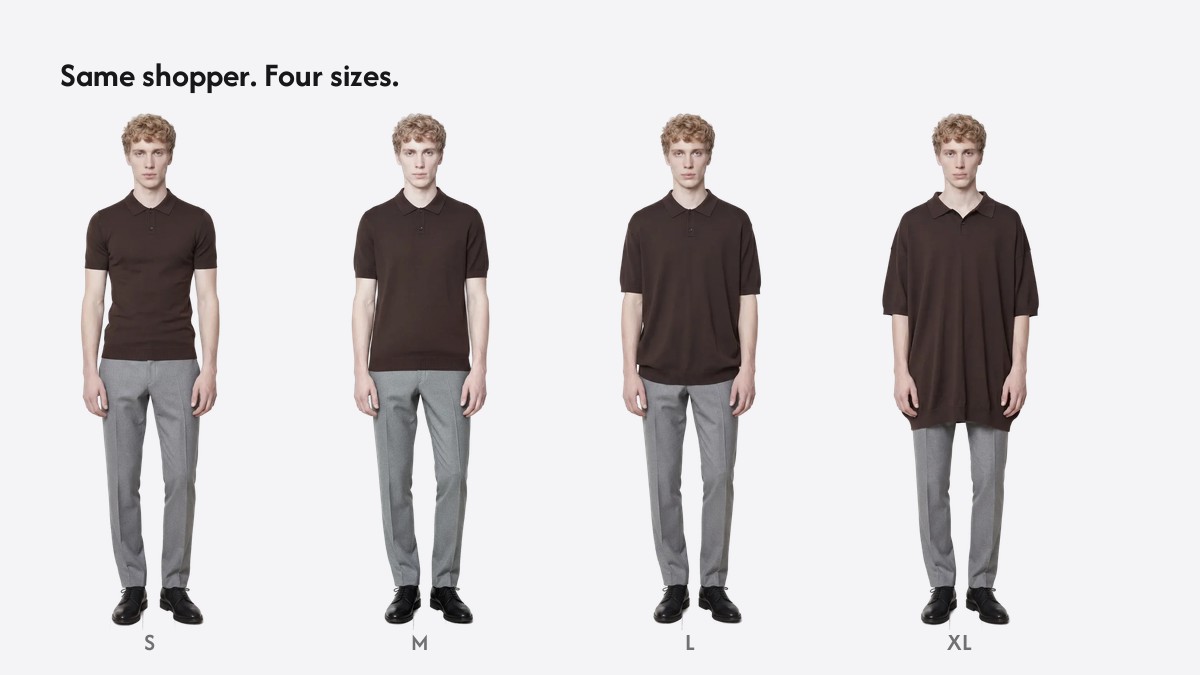
Faire’s Independent Retail Pulse: Fashion, Rewired, published this month, has a number that fit tools should be reading twice: the share of apparel units sized above an XL has fallen by over 27% in the past three years. The report puts one in eight adults on GLP-1 drugs and says the figure could triple by 2030. A fifth of people who have lost weight on them say they are shopping less at big-box chains. Bloomberg reported in August that retailers are already cutting plus-size ranges in response.
The retail conversation is about assortment. The quieter problem is data.
Most size recommendations are a memory
The common way to recommend a size is to look at what a shopper bought and kept before. It is cheap, it needs no measurements, and it works well when bodies are stable. That assumption has just stopped holding for a meaningful slice of the market. A shopper who bought an XL in 2024 and kept it may be a medium today. Every recommendation drawn from that purchase history is confidently pointing at a body that is no longer there.
The failure is invisible in the data. A history-based model does not know the shopper changed, and the shopper often does not know their new size either, which is how they end up asking the model in the first place. The result is a return that the returns report files under “size,” with nothing in the system that could have predicted it.
Why measurements do not decay
A recommendation built from the shopper’s current chest, waist and inseam has no memory to go stale. It answers the question as the body is today, against the garment’s own chart. That is a different kind of input from “what did this person keep last year,” and the difference only matters when bodies move. They are moving now.
The same logic applies to the render. A try-on built on a photo the shopper uploads this week shows the garment on the body they have this week, not on an avatar assembled from old orders.
What this means for a store this season
- Check your sizing tool’s inputs. If it reasons from purchase history or from a static profile the shopper filled in once, its accuracy is drifting with the population. Ask the vendor how it handles a shopper whose size has changed.
- Watch the between-sizes rate. Shoppers mid-change are the ones who bracket, ordering two sizes and returning one. That number is a direct read on how much of your base is in motion.
- Prompt for fresh inputs. A thirty-second measurement step at the point of decision costs less than the return it prevents, and the shopper on a GLP-1 is the one most likely to answer it, because they are the one least sure of their size.
Where Garu fits
Garu never recommends from purchase history. Every size comes from the shopper’s measurements, given at the time, matched to your chart for that garment, and rendered on a photo of the body they have now. The girth-first approach was built for accuracy; it turns out it also does not age.
Questions merchants ask
Do GLP-1 drugs change clothing sizes enough to affect sizing tools?
Yes. Faire’s September 2026 report shows units above an XL down 27% over three years, with one in eight adults on a GLP-1 and that figure projected to triple by 2030. A tool that recommends from past purchases has no way to know a returning shopper’s size has changed.
What is a purchase-history size recommendation?
A recommendation that reasons from what a shopper bought and kept before. It needs no measurements, which makes it cheap, and it assumes bodies are stable, which is now wrong for a meaningful share of shoppers.
How does measurement-based sizing avoid this?
It asks for the shopper’s chest, waist and inseam at the time of the decision and matches them to the garment’s own chart. There is no stored history to go stale. Garu works this way, and renders the try-on on a photo taken now, not an avatar assembled from old orders.