Field guide7 min readSeptember 21, 2026
How to get a Zara-style AI fitting room on your own store.
Zara put an AI try-on inside its app. ASOS did the same with Aiuta in February. Google folded Doppl into Search. What the big three actually shipped, what it means for a Shopify brand, and how to get the same thing on your product pages this week.
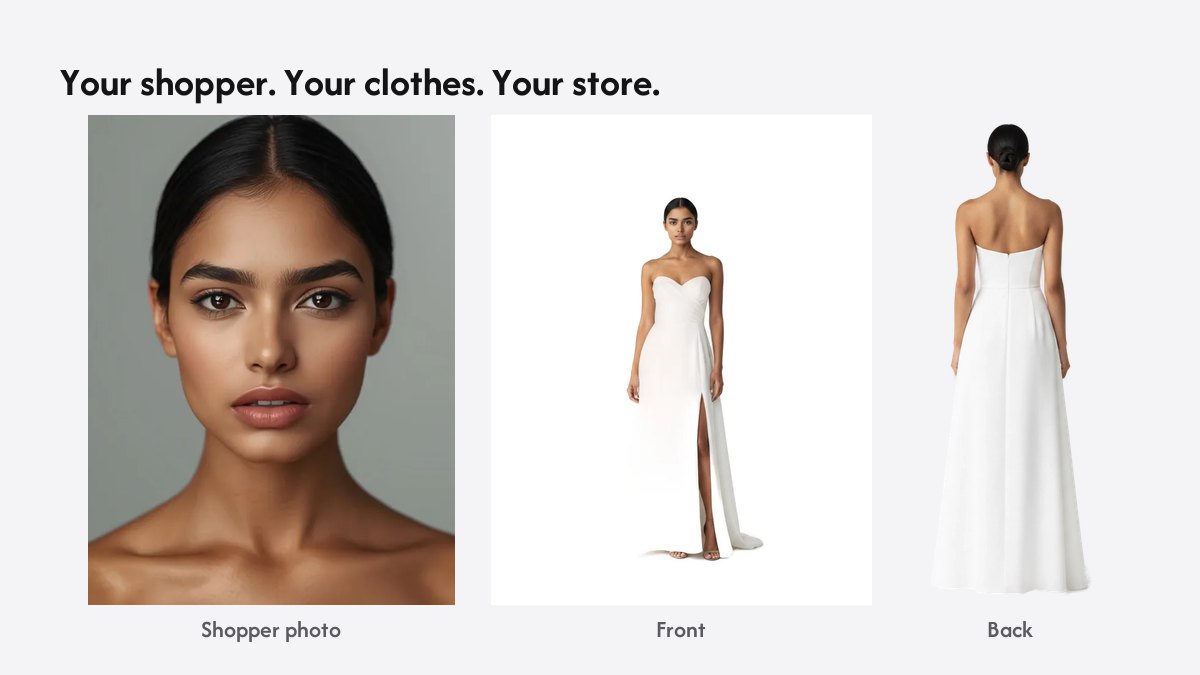
Three of the largest names in fashion retail now ship an AI fitting room, and each one did it differently. What they have in common is that none of it is available to other brands. This is what each launched, in their own terms, and how a Shopify store gets the same thing on its own product pages.
What Zara shipped
Zara’s Try-On is a feature of the Zara app, not the website. The shopper picks an item, taps Try On, takes a face photo and a full-body photo, and the app builds an avatar. The avatar moves: it walks and changes position, so the shopper sees the garment from more than one angle. Items can be tried on alone or combined into an outfit. It is available on selected items, and Zara shows a notice that the images are generated by AI and “may not accurately reflect reality”, as Marketing4eCommerce reported in March.
What Zara has not said publicly is anything about sizing. The feature shows the look. Whether the M or the L is the right one is still the shopper’s problem.
What ASOS shipped
On 17 February 2026 ASOS launched a hybrid try-on with the AI fashion platform Aiuta, on its iOS app, for select UK and US customers, across around 10,000 products. The shopper either uploads their own photo or picks a virtual model. ASOS’s head of digital product, Melissa Lim, said customers “want the confidence of seeing how something will really look but don’t want to be pushed into doing it one way.” ASOS says each try-on loads in 4 to 7 seconds. Again, the release says nothing about size.
What Google did
Google’s Doppl app, its standalone try-on experiment, shut down on 30 April 2026. The technology did not go away; Google moved it into Search and Shopping, where a Try it on option now appears on supported apparel listings. That matters for a brand in a different way: the try-on happens on Google’s surface, with Google’s model of the garment, before the shopper reaches your page.
What this means for a brand on Shopify
Zara and ASOS built or licensed their fitting rooms for themselves. A brand with a Shopify store and a catalogue of a few hundred products is not going to build one, and does not need to. The same class of technology is available as an app, and the install is an afternoon rather than a quarter. The five-step guide walks through it.
The choice that matters is which kind of fitting room you install. The Zara and ASOS features are look-only: they show the garment on the shopper and stop. That solves half the doubt. The other half, which size, is the reason behind around 42% of fashion returns, and a fitting room that does not answer it has left the expensive problem where it was.
The version with a size in it
Garu takes one full-length photo, renders the shopper wearing the product on your page, and returns the front and the back. Alongside the picture it returns a size, matched to your own size chart for that garment, with a fit note. On Garu Plus it renders each size as its own garment, so a shopper stuck between two sizes sees both on their own body. It runs as a Shopify theme embed with no theme code, on the phone and the desktop site rather than in a separate app, and shopper photos are deleted within 24 hours.
That is a Zara-style fitting room in the sense that counts: the shopper sees themselves in your clothes before they buy. It also does the thing Zara’s does not, and that is the part that shows up in your returns report.
Questions merchants ask
How does Zara’s virtual try-on work?
It is a feature of the Zara app. The shopper takes a face photo and a full-body photo, the app builds an animated avatar, and selected items can be tried on alone or as an outfit. Zara shows a notice that the images are generated by AI and may not reflect reality exactly.
What did ASOS launch with Aiuta?
On 17 February 2026 ASOS launched a hybrid try-on on its iOS app for select UK and US customers, on around 10,000 products. Shoppers can upload their own photo or pick an AI-generated virtual model. ASOS says each result loads in 4 to 7 seconds.
Can a small brand get the same technology?
Yes, through a Shopify app. Garu renders the shopper wearing the product from one uploaded photo, returns the front and the back, and adds a size recommendation matched to the merchant’s own chart. It installs as a theme embed with no theme code.
What happened to Google Doppl?
Google shut the standalone Doppl app on 30 April 2026 and moved its try-on into Google Search and Shopping, where it appears on supported apparel listings.