Explainer7 min readSeptember 21, 2026
What is virtual try-on? Types, how it works, and what it costs.
Virtual try-on lets a shopper see a garment on their own body before they buy. There are four kinds, and they are not equal. The plain definition, how each one works, what it does for returns, and what it costs a Shopify store.
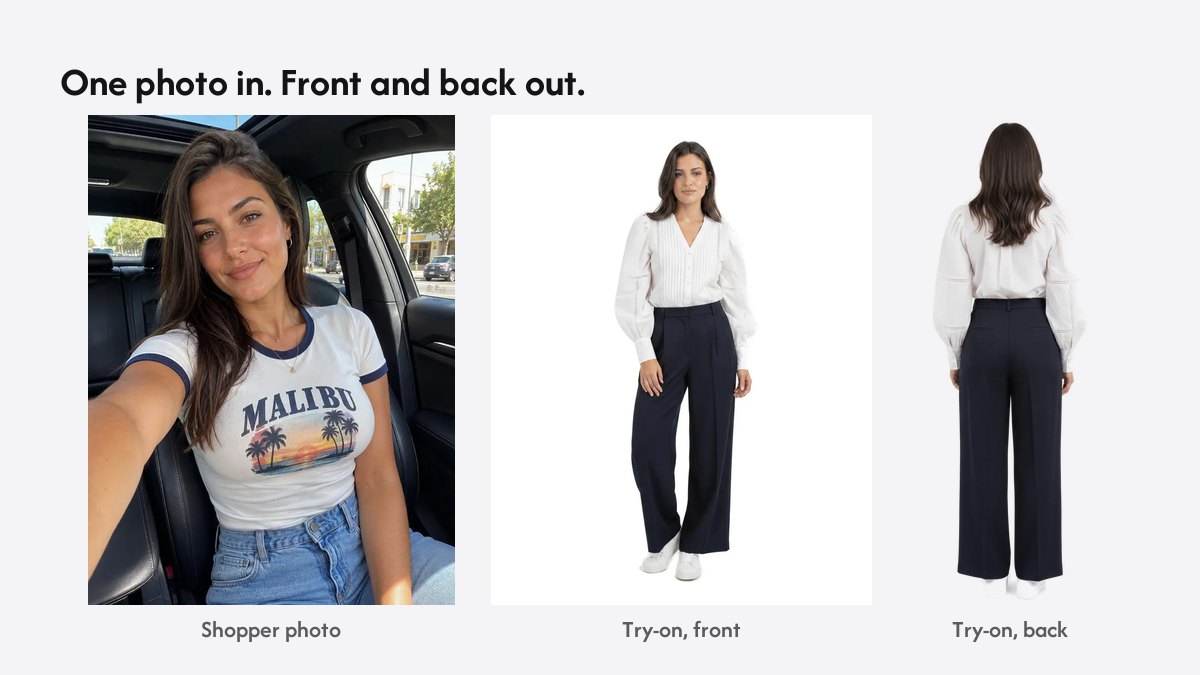
Virtual try-on is a tool that shows a shopper how a product looks on them before they buy it. For clothing, that means a picture of the shopper wearing the garment. The picture comes from a photo they upload, a live camera, or an avatar built from their measurements. The point is to answer the question that stalls most apparel purchases: how will this look on me?
The phrase covers four technologies that behave very differently. Merchants who buy the wrong one are usually paying for a picture that cannot do the job they bought it for.
The four kinds
- 2D overlay. The product image is cut out, warped and pasted over the shopper’s photo. Fast and cheap. The fabric does not drape, the fit does not change with size, and there is no back view. Most “AI try-on” apps in the Shopify App Store work this way.
- AI render. A model builds a body from the shopper’s photo and renders the garment on it, so the fabric hangs the way it would on that body. It can produce a back view and, done properly, a different picture for each size. This is what Garu does.
- AR camera. The product is drawn over a live camera feed. It works for glasses, jewellery, shoes and makeup, where the product sits on a rigid part of the body. It does not work for clothing, because a camera cannot show how cloth falls.
- 3D avatar. The shopper enters measurements or is scanned, and a body is generated to dress. Accurate for fit, but the avatar rarely looks like the shopper, and shoppers do not trust a size call from a body that is not theirs.
If you want one check that separates the first two, ask for the back view. An overlay has none.
How image-based try-on works
The shopper uploads one photo, usually a full-length shot taken on a phone. The model estimates the body underneath the clothes: shoulders, chest, waist, hips, the length of the arms and legs. It then takes the garment from the product page, understands its shape and fabric, and renders it on that body. The result is returned to the product page in a few seconds. A good system produces the front and the back from the same photo. A better one can render each size of the garment as its own piece, so a shopper can see an M and an L side by side on their own body.
The same body estimate is what makes a size recommendation possible. Once the model knows the shopper’s chest, waist and inseam, it can compare them with the garment’s size chart and say which size to order. Try-on and sizing are the same computation viewed two ways, which is why the tools that do both are more useful than the ones that do one.
What it does for a store
Three things, roughly in the order merchants notice them.
- Fewer size-related returns. Around 42% of fashion returns are size-related. A try-on with a size recommendation is the only product-page tool that addresses that reason directly.
- Higher conversion on the products that get tried on. A shopper who has seen the garment on themselves has resolved the doubt that would otherwise have sent them to a competitor or to a two-size order.
- Time on page and data. Which products get tried on, by whom, and what they did next. That is a fit signal no analytics tool had before.
What it costs
Shopify apps price per try-on. Garu is free for 25 try-ons a month, $199 for 800 and $399 for 2,500, all with front and back views and a size recommendation. Enterprise platforms sold to retailers like ASOS and Zara price on contract. The cost-per-try-on comparison lays out what each Shopify app returns for the money.
Where it is going
Try-on is leaving the product page. Google folded its Doppl experiment into Search and Shopping in April 2026, ASOS ships it in its app, and agentic checkout is putting the Buy button inside a chat. A store’s try-on will need to work as a service an agent can call, not only as a button on a page. More on that here.
Questions merchants ask
What does virtual try-on mean?
It is any tool that shows a shopper how a product looks on them before purchase. For clothing that means a picture of the shopper wearing the garment, made from a photo they upload, a camera feed, or an avatar built from their measurements.
Is virtual try-on the same as augmented reality?
No. AR try-on draws the product over a live camera feed and works for glasses, shoes and makeup. Apparel try-on is usually image-based: the shopper uploads a photo and gets back a rendered image, because a camera cannot show how a fabric hangs on a body.
Does virtual try-on reduce returns?
It reduces the returns caused by doubt about look and fit, which is where most apparel returns come from. It does nothing for returns caused by damage or late delivery. A try-on that also recommends a size addresses the largest single reason, wrong size.
How much does virtual try-on cost on Shopify?
Apps price per try-on. Garu is free for 25 try-ons a month, then $199 for 800 and $399 for 2,500. Enterprise suites price on contract and usually start in the thousands per month.